


How can a California jail death lawyer help after an in-custody tragedy? Every year, hundreds of people die in California jails. Most of them have not been convicted of anything. They are awaiting trial, held on a warrant or a probation violation, or in the first days after an arrest. When a person is locked in a cell, the county controls their medical care, their safety and who they are housed with. When that control fails and someone dies or is seriously injured, California and federal law give the family a way to hold the county and its staff accountable. McKenzie Scott PC is a civil rights trial firm that represents families in jail death cases across California. Call (619) 794-0451 for a free, confidential case review.
Can You Sue if Someone Dies in Jail in California?
In many cases, the answer is yes. When a death in a California jail was caused by neglect, denied or delayed medical care, ignored suicide risk, failure to protect detainees from violence, or excessive force by staff, the family may bring:
- A federal civil rights lawsuit under 42 U.S.C. section 1983 against the county, individual deputies or officers, and jail medical staff.
- A California wrongful death claim by the person’s spouse, registered domestic partner, children or other eligible heirs (Code of Civil Procedure section 377.60).
- A survival claim brought by the person’s estate for harms the person suffered before death (Code of Civil Procedure section 377.30).
- State-law claims such as Government Code section 845.6, which makes public entities liable when employees know a person in custody needs immediate medical care and fail to summon it, and the Bane Act (Civil Code section 52.1).
Strict deadlines apply, and some are as short as six months. Call (619) 794-0451 as soon as possible.
Lost a Loved One in a California Jail?
The county begins building its defense the day a person dies in its custody. Your family deserves the same urgency. Call McKenzie Scott PC at (619) 794-0451 for a free, confidential case evaluation.
Get free case evaluation

AS SEEN ON






Table of Contents
How Many People Die in California Jails?
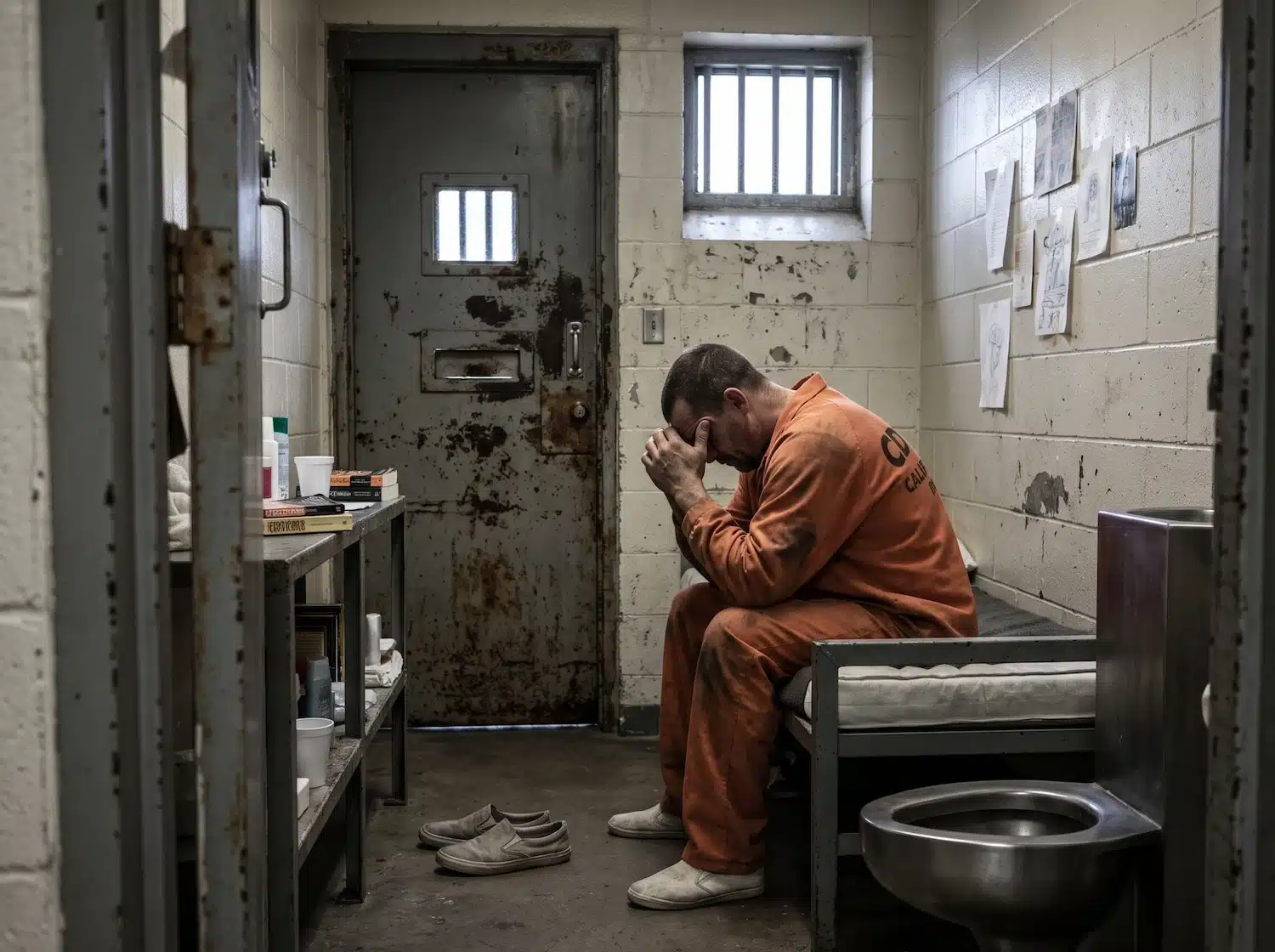
Too many – and more than the jail population would predict. California jails hold far fewer people than a decade ago, yet deaths climbed to a record 215 in 2022, CalMatters reported. Fentanyl and other overdoses drove some but not all of that increase, and nearly everyone who died was awaiting trial, meaning they died while presumed innocent of any crime.
A Care First California analysis of state Attorney General data counted at least 2,312 deaths in law enforcement custody statewide from 2011 through 2022. About 40 percent happened during the first week in jail, and only about 14 percent happened after sentencing. The first days after booking, when intake screening, withdrawal monitoring and housing decisions happen, are often the most dangerous.
Some counties stand out. A 2022 California State Auditor report found that San Diego County had one of the highest jail death rates among the state’s large counties from 2006 through 2020. Riverside and San Bernardino counties together account for almost 20 percent of the state’s in-custody deaths, compared to about 12 percent of its population.
Why Jail Deaths Happen
- Medical neglect: ignored symptoms, missed medications, slow emergency response and delayed hospital transfers.
- Overdose and withdrawal: drugs that reach housing units, and alcohol, opioid or benzodiazepine withdrawal that staff fail to monitor.
- Suicide: inadequate intake mental health screening, people removed from watch too soon, and safety checks that are logged but not done.
- Violence: housing a vulnerable person with a dangerous cellmate, or ignoring threats.
- Force: excessive restraint, Tasers, prone positioning and cell extractions.
- Mental health crises treated as behavior problems instead of medical emergencies.
California’s New Jail Death Laws, 2023 to 2027
California has passed a series of laws aimed at jail deaths. Families should know what each one does, because each can produce records and findings that matter in a lawsuit.
AB 2761: public death disclosures (2023)
Since January 1, 2023, every law enforcement agency must post basic information about each in-custody death on its website within 10 days, including the date, the facility and, as it becomes known, the manner and means of death. Agencies must also report each death to the state Attorney General within 10 days under Government Code section 12525.
SB 519: state review of jail deaths (2023)
SB 519 created an In-Custody Death Review Director within the Board of State and Community Corrections (BSCC) to review jail death investigations and recommend changes. As of early 2026, Prison Legal News reported that the office had not completed a single review, and it has no power to enforce its recommendations. State review is not a substitute for a family’s own investigation.
Penal Code 832.10: jail death records open to the public (2024)
SB 519 also added Penal Code section 832.10. Since July 1, 2024, it has made a jail’s own investigation records about a death in its custody public under the California Public Records Act. Those records include investigative reports, video, audio and photographs, interview recordings, autopsy reports, the materials sent to the district attorney, findings, and any discipline imposed on staff. The jail generally must produce them within 45 days of a request. It can delay release while a criminal case or internal investigation is still active. Because a family can request these records before filing a lawsuit, they are often the fastest way to learn what the jail itself knows about how a loved one died.
The FACTS Act, AB 1108: independent death investigations (2027)
In most California counties, the sheriff is also the coroner, so the agency responsible for the safety and care of the person who died then gets to determine the official cause of death. Starting in January 2027, the FACTS Act requires those counties, which number about 48, to send in-custody death investigations to an independent medical examiner or a physician chosen by the Board of Supervisors rather than the sheriff.
SB 1379: Riverside County’s coroner split (2026)
In October 2026, Governor Newsom signed SB 1379, which requires Riverside County to separate its coroner from the Sheriff’s Department and set up an independent medical examiner by July 1, 2027.
What this means for families now: for any death before 2027, and in any county where the sheriff still controls the autopsy, consider a private forensic pathologist and, where indicated, a second autopsy before burial or cremation.
The Legal Standard in California Jail Death Cases
Most people who die in California jails are pretrial detainees, and their rights come from the Fourteenth Amendment. The Ninth Circuit, which covers California, judges their claims by an objective standard. A family does not have to prove what a deputy or nurse was secretly thinking. It is enough to show that staff made a decision that put the person at substantial risk of serious harm, failed to take reasonable steps that a reasonable official would have recognized were needed, and that this failure caused the death.
- Castro v. County of Los Angeles (9th Cir. 2016, en banc) set this standard for failure-to-protect claims, such as cellmate violence.
- Gordon v. County of Orange (9th Cir. 2018) applied it to denied or inadequate medical care.
People serving a sentence are protected by the Eighth Amendment, which requires showing deliberate indifference. Counties are liable under Monell when a policy, custom or failure to train caused the violation. Individual officers can also face punitive damages.
Hold Sheriff’s Departments Accountable Statewide
When state and local care fails, our civil rights trial lawyers fight to protect families across California. Contact McKenzie Scott PC today at (619) 794-0451 for immediate, no-cost legal support.
Get free case evaluation

Deadlines for a California Jail Death Claim
- Six months to present a written government claim to the county for state-law claims (Government Code section 911.2).
- Six months after a written rejection to file suit in state court (Government Code section 945.6).
- One year, and only on narrow grounds, to apply to present a late claim (Government Code section 911.4).
- Generally two years to file a federal civil rights lawsuit, with no government claim required (Code of Civil Procedure section 335.1 supplies the limitations period for section 1983 cases).
Evidence moves faster than any of these deadlines. Jail video, safety-check logs and housing records can be overwritten or lost within weeks unless a lawyer demands that they be preserved.
County Jail, State Prison or Police Custody: Why It Matters
- County jails are run by sheriff’s departments (and in a few places by a county corrections department). Claims go to the county, usually through the Clerk of the Board of Supervisors.
- State prisons are run by the California Department of Corrections and Rehabilitation. State-law claims go to the state’s Government Claims Program, on the same six-month timeline.
- Police custody and arrests: deaths during an arrest, in transport or in a city holding cell can involve the city police department as well as, or instead of, the county.
Many people pass through more than one agency’s custody before they die. Identifying every responsible agency early protects every claim.
Where California Jail Death Lawsuits Are Filed
Federal civil rights cases are filed in the federal district that covers the county where the death occurred:
- Southern District of California: San Diego and Imperial counties.
- Central District of California: Los Angeles, Orange, Riverside, San Bernardino, Ventura, Santa Barbara and San Luis Obispo counties. Orange County cases are heard in Santa Ana; Riverside and San Bernardino cases in Riverside.
- Eastern District of California: Sacramento, Fresno, Kern and much of the Central Valley and interior.
- Northern District of California: the Bay Area and the North Coast.
State-law claims are heard in the superior court of the county where the death occurred.
Jail Death Lawyers by County
Every county runs its jails differently, with its own facilities, oversight, coroner and record of deaths. Our county guides analyze each one.
San Diego County
San Diego County’s jail system has drawn statewide scrutiny for years, including the 2022 State Auditor report. McKenzie Scott PC is based in San Diego and has litigated some of the county’s most significant in-custody death cases. Read more from our San Diego County jail death lawyer team.
Orange County
The Orange County Sheriff’s Department runs the Theo Lacy Facility, the Intake Release Center, the Central Jails and the James A. Musick Facility, and its Coroner is a division of the same department. See our Orange County jail death lawyer guide.
San Bernardino County
Most in-custody deaths reported by the San Bernardino County Sheriff’s Department since 2023 occurred at West Valley Detention Center in Rancho Cucamonga, and the county’s jails have operated under a federal consent decree since 2018. See our San Bernardino County jail death lawyer guide.
Other California counties
We also review jail death cases from Riverside, Los Angeles, Imperial, Kern, Ventura and other California counties. Call (619) 794-0451 to talk about a death in any California jail.
What Families Can Recover
- Loss of the person’s love, companionship, care, comfort and guidance.
- Lost financial support and household services.
- Funeral and burial expenses.
- In federal civil rights cases, damages for the person’s own suffering before death and for the loss of life itself.
- Punitive damages against individual officers for malicious or reckless conduct (not available against the county itself).
- Attorney’s fees in successful civil rights cases (42 U.S.C. section 1988).
Many families also pursue changes in policy, training and staffing so the same failure does not happen to another person. Litigation is often what produces those changes.
What to Do After a Loved One Dies in a California Jail
- Do not sign any release or agreement from the county, the jail or a medical contractor before talking to a lawyer.
- Ask about an independent autopsy before the body is released for burial or cremation.
- Find the agency’s AB 2761 death notice on its website and save a copy.
- Request the autopsy and toxicology reports from the coroner or medical examiner.
- Write down the arresting agency, the booking date, every facility your loved one was moved to and every person you spoke with.
- Save jail calls, video visit records, letters, voicemails and commissary records.
- Have a lawyer send preservation demands for video, safety-check logs, classification records and medical charts right away.
Why Families Choose McKenzie Scott PC
McKenzie Scott PC is a California civil rights and trial firm founded by Michele A. McKenzie and Tim Scott. In-custody death litigation is at the center of our civil rights practice, and our results show what happens when a sheriff’s department faces a firm that will go to trial, including a recent $16 million settlement for the family of Hayden Schuck, the largest wrongful-death settlement against San Diego County ever.
We move quickly to preserve evidence, work with independent forensic pathologists and corrections experts, and prepare every case for trial. Our office is in San Diego, and we work with families across California by phone, video and in person. There is no fee unless we recover for your family. See our trial results, meet our team, or learn about our jail injury, police misconduct and wrongful death work.
Talk to a California Jail Death Lawyer
The county begins building its defense the day a person dies in its custody. Your family deserves the same urgency. Call McKenzie Scott PC at (619) 794-0451 or request a free case evaluation.
*This page provides general information about California and federal law and is not legal advice. Contacting us does not create an attorney-client relationship. Prior results do not guarantee a similar outcome; all cases are unique. Attorney advertising.
Sources
- CalMatters, Deaths in California jails increase despite decline in inmates, March 2024
- CalMatters, Inland Empire jail deaths (Care First California data), October 2024
- California State Auditor, Report 2021-109, February 2022
- Prison Legal News, California Oversight Agency Hasn’t Finished a Single Review of Jail Deaths, February 2026
- Assemblymember Gregg Hart, FACTS Act Signed Into Law, October 15, 2025
- NBC Palm Springs, Newsom signs bill separating Riverside County coroner from Sheriff’s Department, October 2, 2026
- BSCC, In-Custody Death Review statutes and regulations
California Jail Death FAQs
Can you sue if someone dies in jail in California?
Yes, in many cases. Families can bring federal civil rights claims under 42 U.S.C. section 1983 and California wrongful death and survival claims against the county, individual officers and jail medical staff when a death was caused by medical neglect, failure to protect, missed suicide risk or excessive force.
How long do you have to sue for a jail death in California?
For state-law claims, a written government claim must be presented to the county within six months of the death. Federal civil rights lawsuits generally must be filed within two years. Evidence such as jail video can disappear much sooner, so families should contact a lawyer quickly.
Who can file a wrongful death lawsuit for a jail death in California?
Under Code of Civil Procedure section 377.60, the person’s surviving spouse or registered domestic partner, children and other heirs can bring a wrongful death claim, and in some circumstances parents or other dependents. The person’s estate brings a separate survival claim.
Who investigates deaths in California jails?
The agency that runs the jail investigates first, the county district attorney reviews for possible crimes, and the state Attorney General receives a report within 10 days. In most counties the sheriff is also the coroner. Starting in January 2027, the FACTS Act requires independent investigation of in-custody deaths in counties with combined sheriff-coroner offices.
What is AB 2761?
AB 2761 is a California law, in effect since January 1, 2023, that requires law enforcement agencies to post information about every in-custody death on their websites within 10 days and update it as the investigation continues.
Does a district attorney's decision not to file charges end our case?
No. A criminal review asks whether someone committed a crime. A civil case asks whether the county and its staff failed to protect and care for the person, under a different and lower standard of proof. Families win civil cases even when no one is charged.
What is the difference between a jail death and a prison death case in California?
County jails are run by sheriff’s departments, and claims go to the county. State prisons are run by CDCR, and state-law claims go to the state Government Claims Program. Federal civil rights claims are available in both, and the six-month claim deadline applies in both.
How much is a California jail death case worth?
It depends on the facts, the evidence of what staff knew and did, the person’s age and family relationships, and the strength of the civil rights claims. Results range widely. Cases prepared for trial tend to resolve for more, because counties settle based on what they expect a jury to do.
How much does a California jail death lawyer cost?
McKenzie Scott PC handles jail death cases on contingency. The consultation is free, and there is no fee unless we recover compensation for your family.
Talk to a California Jail Death Lawyer
The county begins building its defense the day a person dies in its custody. Your family deserves the same urgency. Call McKenzie Scott PC at (619) 794-0451 or request a free case evaluation.
*This page provides general information about California and federal law and is not legal advice. Contacting us does not create an attorney-client relationship. Prior results do not guarantee a similar outcome; all cases are unique. Attorney advertising.
Sources
- CalMatters, Deaths in California jails increase despite decline in inmates, March 2024
- CalMatters, Inland Empire jail deaths (Care First California data), October 2024
- California State Auditor, Report 2021-109, February 2022
- Prison Legal News, California Oversight Agency Hasn’t Finished a Single Review of Jail Deaths, February 2026
- Assemblymember Gregg Hart, FACTS Act Signed Into Law, October 15, 2025
- NBC Palm Springs, Newsom signs bill separating Riverside County coroner from Sheriff’s Department, October 2, 2026
- BSCC, In-Custody Death Review statutes and regulations