


If you’re seeking justice after a loved one died while incarcerated, a San Bernardino County jail death lawyer should be your first phone call. When someone you love dies in a San Bernardino County jail, the agency that held them is also the agency that investigates the death and, until 2027, decides the cause of death. That is a lot of control in one set of hands. McKenzie Scott PC is a civil rights trial firm that represents families from Rancho Cucamonga to Victorville to Yucaipa after deaths at West Valley Detention Center, the Central Detention Center, the High Desert Detention Center and Glen Helen. Call (619) 794-0451 for a free, confidential case review.
Short Answer: Can Your Family Sue San Bernardino County?
Often, yes. If a person died because San Bernardino County Sheriff’s Department staff ignored a medical emergency, failed to protect them from a violent cellmate, missed suicide warning signs or used excessive force, the family may have claims against the County of San Bernardino, individual deputies and jail medical staff. Keep two clocks in mind:
- Six months to present a written claim to the County of San Bernardino for state-law claims (Government Code section 911.2).
- Two years, generally, to file a federal civil rights lawsuit under 42 U.S.C. section 1983.
Jail video and housing logs can be gone long before either deadline. Call (619) 794-0451 so a preservation demand goes out right away.
Don't Let Critical Jail Evidence Disappear
Jail video and housing logs can be deleted long before legal deadlines arrive. Call (619) 794-0451 today so our team can immediately issue an evidence preservation demand.
Get free case evaluation

AS SEEN ON






Table of Contents
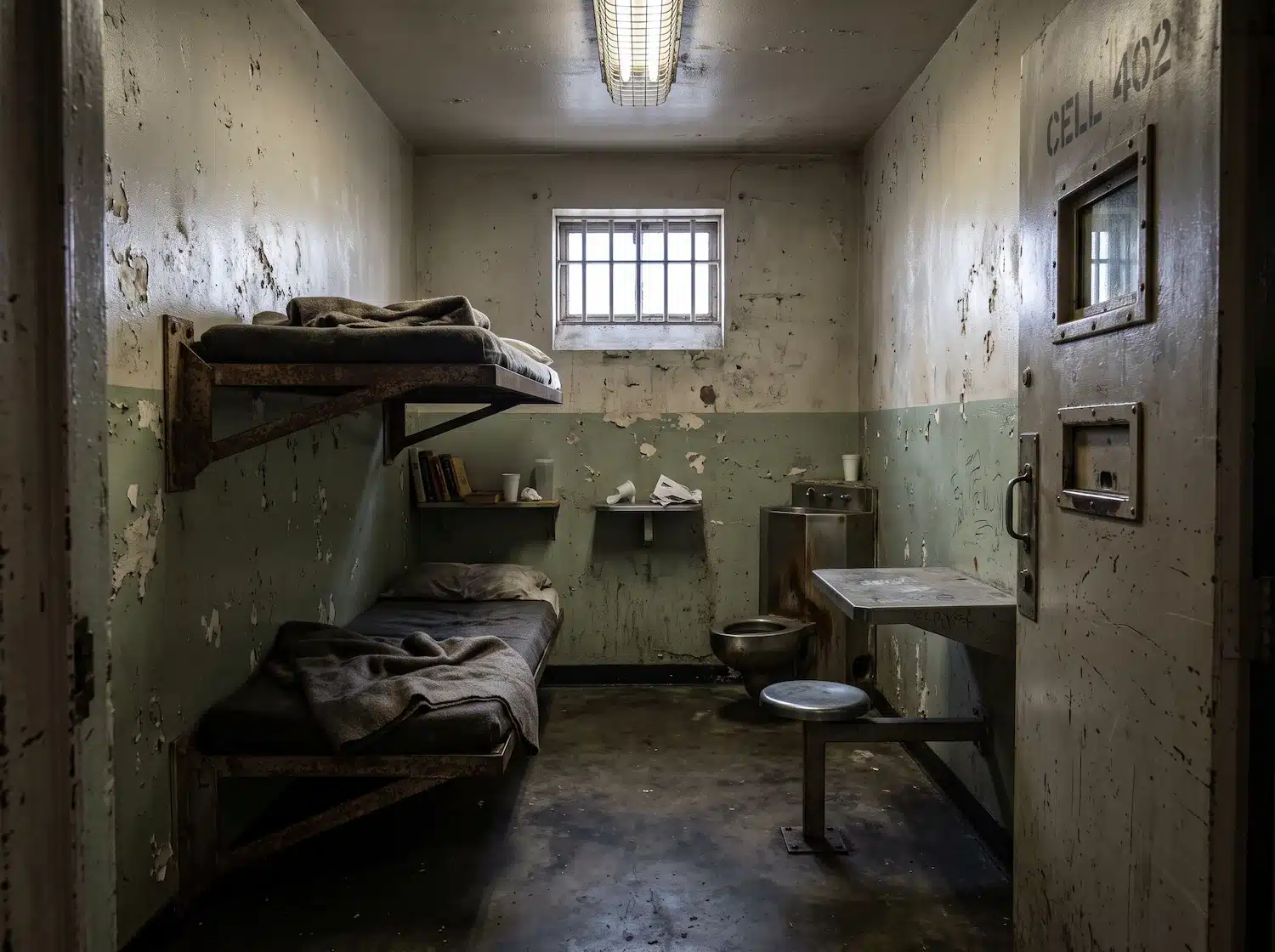
San Bernardino County Jail Deaths by the Numbers
The San Bernardino County Sheriff’s Department runs the county’s jails and posts each in-custody death on its AB 2761 disclosure page, as state law has required since 2023. That list, reviewed in October 2026, shows:
- 18 deaths in 2023, 12 in 2024, 9 in 2025, and at least 8 so far in 2026. Seven of the 2026 deaths are on the list, all at West Valley Detention Center. The eighth, at the High Desert Detention Center on October 27, 2026, was announced by the Sheriff on October 30.
- About 85 percent of the 46 deaths listed from 2023 through 2026 were reported at West Valley. The rest were at the Central Detention Center, the High Desert Detention Center and, in one 2025 case, a Victorville courthouse.
- 216 deaths in law enforcement custody from 2011 through 2022, according to the Care First California report covered by CalMatters. San Bernardino and Riverside counties together accounted for about 19 percent of in-custody deaths statewide compared to about 12 percent of the state’s population. The count includes deaths during arrests, not only in jail.
- December 2023 alone saw five deaths in county jails on the Sheriff’s list, four of them at West Valley. Prison Legal News reported on four of them.
Behind each number is a family that usually learns very little at first. The Sheriff’s public notices typically give an age, a facility and a line that the cause of death is pending. The details that matter come later, if at all, unless someone forces them out.
San Bernardino County Jails Where Deaths Happen
West Valley Detention Center (Rancho Cucamonga)
West Valley, at 9500 Etiwanda Avenue in Rancho Cucamonga, is the county’s largest jail and the site of most in-custody deaths. It houses people from across the county, including many transferred from the High Desert. In April 2026, 26-year-old Mariel Mays of Adelanto was found unresponsive at West Valley five days after he was transferred there from the High Desert Detention Center. West Valley is also where Robert Sutton, 58, was beaten to death in 2019 by a cellmate with a violent history, after staff placed the two men together despite a designation that Sutton have his own cell.
High Desert Detention Center (Adelanto)
The High Desert facility books arrestees from Victorville, Hesperia, Apple Valley, Adelanto, Barstow and the surrounding desert stations. In 2017, Betty Lozano, 34, died there after she was placed in a sobering cell during a medical emergency; Prison Legal News reported that video showed her seizing and vomiting while no one checked on her. Her children’s lawsuit, which alleged inadequate screening and monitoring, settled for $1.9 million.
Central Detention Center (San Bernardino)
The downtown San Bernardino jail holds people awaiting court in the county seat. Deaths were reported there in 2023, 2024 and 2025.
Glen Helen Rehabilitation Center (Devore)
Glen Helen has been the county’s primary facility for people serving county sentences. It closed for renovations in August 2024; the first renovated section reopened on September 19, 2026, housing men transferred from other county jails.
Hospitals, station jails and courthouses
Some in-custody deaths are pronounced at hospitals, including Arrowhead Regional Medical Center in Colton, San Antonio Regional Hospital in Upland and Kaiser Permanente’s Fontana hospital, after a medical problem began in a housing unit. Deaths have also occurred in station jails, such as the Morongo Basin jail in Joshua Tree, and in court holding. The county’s duty follows the person wherever it holds them.
The Sheriff Investigates Its Own Jail Deaths, for Now
San Bernardino County has a combined Sheriff-Coroner. When someone dies in a county jail, the Sheriff’s Department runs the jail, its Homicide Detail investigates the death, and its Coroner Division determines the cause and manner of death. Families are right to ask whether that arrangement produces an independent answer.
California lawmakers asked the same question. The FACTS Act (AB 1108), signed in October 2025 and taking effect in January 2027, bars a combined sheriff-coroner from determining the cause and manner of an in-custody death. Instead, the county must use another county’s coroner or medical examiner, or an independent private provider, under an agreement approved by the Board of Supervisors. Until the law takes effect, families should seriously consider a private forensic pathologist and, where possible, a second autopsy before burial or cremation. Time matters here. Talk to a lawyer before the body is released.
A Federal Court Supervised These Jails From 2018 to 2025
In 2016, the Prison Law Office filed a class action over medical, mental health and dental care, use of force, solitary confinement and disability access in San Bernardino County jails. The case, Turner v. County of San Bernardino (C.D. Cal. No. 5:16-cv-00355), led to a consent decree, approved in December 2018, covering everyone held in the county’s jails. As part of the case, the county admitted, for purposes of the lawsuit only, that there was probable cause to believe federal rights violations had occurred. In 2020 the court ordered the county to hire 20 additional mental health clinicians.
The court approved a revised remedial plan in September 2023, and in July 2024 it released the medical-care provisions from monitoring after finding substantial compliance. In August 2025 the Sheriff announced that the department had met every requirement and was no longer under federal court oversight. Deaths have continued. For a family’s individual lawsuit, the Turner record can matter: it documents what the county knew about its own medical and mental health systems, and when.
How People Die in San Bernardino County Jails
- Medical emergencies that go unanswered or are answered too late, often within days of booking.
- Violence by cellmates after housing and classification decisions put a vulnerable person with a dangerous one.
- Drug overdoses and withdrawal, including fentanyl that reaches housing units and withdrawal that is not monitored.
- Suicide, especially in the first days of custody or after a person is taken off watch.
- Mental health crises treated as discipline problems.
- Force and restraint by deputies during cell extractions and transports.
The Legal Standard When a Cellmate or Medical Failure Kills Someone
Most people who die in San Bernardino County jails have not been convicted of anything. They are awaiting trial or held on warrants. Their rights come from the Fourteenth Amendment, and the Ninth Circuit judges those claims by an objective standard.
In Castro v. County of Los Angeles (9th Cir. 2016, en banc), the court held that jail officials violate a pretrial detainee’s rights when they make an intentional decision about the person’s confinement, such as a housing assignment, that puts the person at substantial risk of serious harm, fail to take reasonable available measures to reduce a risk a reasonable officer would have recognized, and cause the injury. The family does not have to prove what a deputy was privately thinking. Carelessness alone is not enough: the conduct must amount to more than negligence, something akin to reckless disregard. That framework fits the cellmate cases that recur in San Bernardino County, and the Ninth Circuit applies the same objective approach to denied medical care.
Sentenced people, such as many held at Glen Helen, are protected by the Eighth Amendment, which requires proof that staff actually knew of and disregarded the risk.
Who Can Be Held Responsible
- The County of San Bernardino, when a policy, custom or failure to train caused the death (a Monell claim under 42 U.S.C. section 1983).
- Individual deputies and supervisors who made the housing decision, skipped safety checks, ignored a request for help or used excessive force. Punitive damages are available against individuals.
- Jail medical and mental health staff and contractors. Private contractors can be separate defendants with their own deadlines.
- State-law claims can also proceed under Government Code section 845.6 (failure to summon immediately needed medical care for a person in custody), the Bane Act (Civil Code section 52.1), negligence and wrongful death.
Hold San Bernardino County & Officers Accountable
From individual deputies to county officials and medical contractors, we hold all responsible parties answerable. Call (619) 794-0451 for a free consultation — you pay no fees unless we recover compensation for your family.
Get free case evaluation

Deadlines and Courts for San Bernardino County Cases
- County claim within six months. Present a written claim to the County of San Bernardino within six months of the death (Gov. Code 911.2). Liability claims are handled by the county’s Risk Management department. Confirm the current claim form and filing address before submitting.
- Six months after a written rejection to sue in state court (Gov. Code 945.6).
- Generally two years for federal civil rights claims, with no county claim required.
- Federal court: the U.S. District Court for the Central District of California, Eastern Division, which sits in Riverside and hears cases arising in San Bernardino and Riverside counties.
- State court: San Bernardino County Superior Court.
Damages Available to the Family
- Loss of the person’s love, companionship, care and guidance.
- Lost financial support and household services.
- Funeral and burial costs.
- In federal civil rights cases, damages for the person’s pre-death suffering and for the loss of life itself.
- Punitive damages against individual officers whose conduct was malicious or in reckless disregard of the person’s rights.
- Attorney’s fees when a civil rights claim succeeds (42 U.S.C. section 1988).
First Steps After a San Bernardino County Jail Death
- Do not sign any release or agreement from the county, the jail or a medical contractor.
- Ask a lawyer about an independent autopsy before the body is released for burial or cremation.
- Request the Coroner’s autopsy and toxicology reports, and keep the Sheriff’s death notice and AB 2761 report.
- Write down the arresting agency, the booking facility, every transfer (for example, High Desert to West Valley) and the dates.
- Save jail call recordings, video visit records, letters, voicemails and commissary history.
- Preserve your loved one’s phone and social media accounts.
- Let your lawyer demand preservation of housing-unit video, safety-check logs, classification records and medical charts.
From Every Corner of a Very Large County
San Bernardino is the largest county in the contiguous United States, and families often live hours from the jail where their loved one died. People are arrested by city police departments in San Bernardino, Fontana, Ontario, Rialto, Redlands, Chino and Upland, and by Sheriff’s stations serving contract cities such as Rancho Cucamonga, Victorville, Hesperia, Apple Valley, Adelanto, Highland and Yucaipa. Whoever made the arrest, once a person is booked into a county jail, the county is responsible for their safety and medical care. In some cases the arresting agency shares responsibility. We work with families from every part of the county by phone, video and in person.
Survived a San Bernardino County Jail, but Seriously Hurt?
The same laws cover people who survive: beatings by deputies or cellmates, untreated illness, denied medication and dangerous withdrawal. The six-month claim deadline applies to injuries too. Learn about our jail injury and in-custody death work or call (619) 794-0451.
Why Families Trust McKenzie Scott PC With Sheriff’s Department Cases
McKenzie Scott PC is a California civil rights and trial firm founded by Michele A. McKenzie and Tim Scott. We take on sheriff’s departments in court, and we have done it at the highest level. We secured $16 million for the family of Hayden Schuck, the largest wrongful-death settlement against San Diego County ever. Additionally, we helped a family recover a $4.5 million jail death settlement after the tragic loss of their loved one who was incarcerated in a private facility.
Our approach in San Bernardino County is the same: preserve the evidence early, bring in independent pathologists and corrections experts, and prepare every case as if it will be tried. Your family pays no fee and we bear all case costs unless we recover. See our trial results, meet the team or read about our civil rights, police misconduct and wrongful death practices.
California Jail Death FAQs
Can I sue if my family member died in a San Bernardino County jail?
Often, yes. Families can bring wrongful death and federal civil rights claims against the County of San Bernardino, individual deputies and jail medical staff when a death resulted from denied medical care, failure to protect, missed suicide risk or excessive force.
Where do most San Bernardino County jail deaths happen?
At West Valley Detention Center in Rancho Cucamonga. About 85 percent of in-custody deaths on the Sheriff’s AB 2761 list from 2023 through 2026 were reported there, including all seven 2026 deaths posted to the list as of October 2026.
Who does the autopsy when someone dies in a San Bernardino County jail?
San Bernardino County has a combined Sheriff-Coroner, so the Sheriff’s Coroner Division determines cause of death. The FACTS Act (AB 1108) will require an independent coroner, medical examiner or private provider to determine the cause and manner of in-custody deaths starting in January 2027. Many families hire their own forensic pathologist in the meantime.
How many people have died in San Bernardino County jails?
The Sheriff’s AB 2761 list shows 18 deaths in 2023, 12 in 2024, 9 in 2025 and 7 so far in 2026, and the Sheriff announced an eighth 2026 death in October. A Care First California report counted 216 deaths in law enforcement custody in the county from 2011 through 2022, including deaths during arrests.
How long do I have to file a claim against San Bernardino County?
State-law claims require a written claim to the County of San Bernardino within six months of the death. Federal civil rights lawsuits generally must be filed within two years. Evidence can be lost much sooner, so contact a lawyer quickly.
What if my loved one was killed by a cellmate?
The county and individual deputies can be liable if staff made a housing decision that put the person at substantial risk and failed to take reasonable steps to protect them. San Bernardino County has paid settlements in cellmate cases, including $857,500 in 2021 and $1.75 million in October 2026.
What is the Turner consent decree?
Turner v. County of San Bernardino is a federal class action that produced a 2018 consent decree requiring improvements to medical and mental health care, use of force and other conditions in the county’s jails. Medical care was released from monitoring in 2024. The Sheriff announced in August 2025 that federal oversight had ended, but the case record can still be important evidence in individual death lawsuits.
Which court hears a civil rights lawsuit against San Bernardino County?
Federal civil rights cases are filed in the Central District of California, Eastern Division, in Riverside. State-law claims are heard in San Bernardino County Superior Court.
How much does it cost to hire a San Bernardino County jail death lawyer?
McKenzie Scott PC handles jail death cases on contingency. The consultation is free, and your family pays no fee and no case costs unless we recover compensation.
Other Counties We Serve
We also represent families in Orange County jail death cases and San Diego County jail death cases. See our California jail death lawyer guide for every county.
Speak With a San Bernardino County Jail Death Lawyer
The county started protecting itself the day your loved one died. Your family deserves someone on its side just as quickly. Call McKenzie Scott PC at (619) 794-0451 or request a free case evaluation.
This page provides general information about California and federal law and is not legal advice. Contacting us does not create an attorney-client relationship. Prior results do not guarantee a similar outcome. Attorney advertising. McKenzie Scott PC, 1350 Columbia Street, Suite 600, San Diego, CA 92101.
Sources
- San Bernardino County Sheriff’s Department, AB 2761 In-Custody Death Disclosures
- Sierra Sun Times, In-Custody Death of 26-Year-Old Adelanto Man at West Valley Detention Center, April 21, 2026
- CalMatters, Inland Empire jail deaths, October 2024
- Davis Vanguard, San Bernardino County Faces Federal Oversight amid In-Custody Death Crisis, October 2026
- Prison Legal News, Four Dead in One Month in San Bernardino County Jails, March 2024
- Prison Legal News, San Bernardino Jail Partially Released from Court Monitoring, November 2024
- Prison Legal News, $857,500 Paid for Jail Detainee’s Death, March 2023
- Hoodline, San Bernardino County Settles Jail Death Case for $1.75M, October 2026
- Assemblymember Gregg Hart, FACTS Act Signed Into Law, October 15, 2025
- Turner (Topete) v. County of San Bernardino, Consent Decree, 2018
- San Bernardino County Sheriff’s Department, Successful in Complying with Medical Provisions of Jail Consent Decree, July 2024
- San Bernardino County Sheriff’s Department, full compliance with jail consent decree, August 12, 2025
- San Bernardino County Sheriff’s Department, Glen Helen Rehabilitation Center reopening, September 2026
- San Bernardino County Sheriff’s Department, In-Custody Death at High Desert Detention Center, October 30, 2026
- County of San Bernardino Risk Management, Liability Claims