

Most people want to believe the justice system is fair. But if you have ever been pulled over, questioned, or arrested, you already know how quickly things can feel confusing and overwhelming. Knowing your rights before a stressful encounter can mean the difference between a manageable situation and life-changing consequences.
Across San Diego, people face serious legal pressure every day without knowing what protections they are entitled to. That is especially true in complex matters like federal criminal defense in San Diego, where the stakes are highest and the rules are most unforgiving. Your ability to stand up for yourself, whether during a routine traffic stop or a federal grand jury investigation, starts with understanding what the law actually guarantees you.
San Diego Police Shootings and the Body Camera Transparency Problem
What happened with body cameras after the shooting of Brian Umana in National City?
After the police shooting of Brian Umana in National City, serious questions emerged about body-worn camera footage access. The video existed but was not made fully available to all parties from the outset. That gap reveals a pattern that defense attorneys and civil rights advocates have observed repeatedly: footage tends to surface when it supports the law enforcement narrative and gets withheld when it does not.
Body cameras were introduced to build public trust. When clips are selectively released or edited before they reach a courtroom, that trust erodes. In both civil rights litigation and criminal defense cases, access to complete, unedited footage is often decisive. A defendant has the right to see all the evidence, not a curated version of it.
If you were involved in an incident with San Diego law enforcement and you believe footage exists, an experienced defense attorney can compel disclosure through discovery. Do not assume that silence from the prosecution means the video does not exist.
Can Police Legally Lie to You During Questioning?
Are police allowed to lie to suspects in California?
Yes. Under current federal and California law, police are permitted to make false statements during interrogations. Officers may claim they have fingerprint evidence when they do not, say that a co-defendant already confessed, or suggest that cooperation will lead to leniency when they have no authority to make that promise. None of those statements are illegal.
These tactics are designed to create pressure and get people talking. The problem is that innocent people confess under that pressure, and people who would otherwise have said nothing incriminate themselves with a single sentence. Research on false confessions consistently shows how powerful interrogation tactics can be, even against people with no intent to mislead.
The most effective response is simple:
- Remain calm.
- State clearly that you are invoking your right to remain silent.
- Ask for a lawyer immediately. Once you say “I want an attorney,” questioning must stop.
Everything you say before invoking those rights can be used against you. A single offhand comment during a traffic stop or a casual response to a detective’s question can become central evidence at trial. If you are facing charges that stem from a police interrogation, contact the San Diego civil rights lawyers from McKenzie Scott to discuss what was said and whether your rights were respected.
What Are Your Rights During a Protest in San Diego?
What legal protections do protesters have in California?
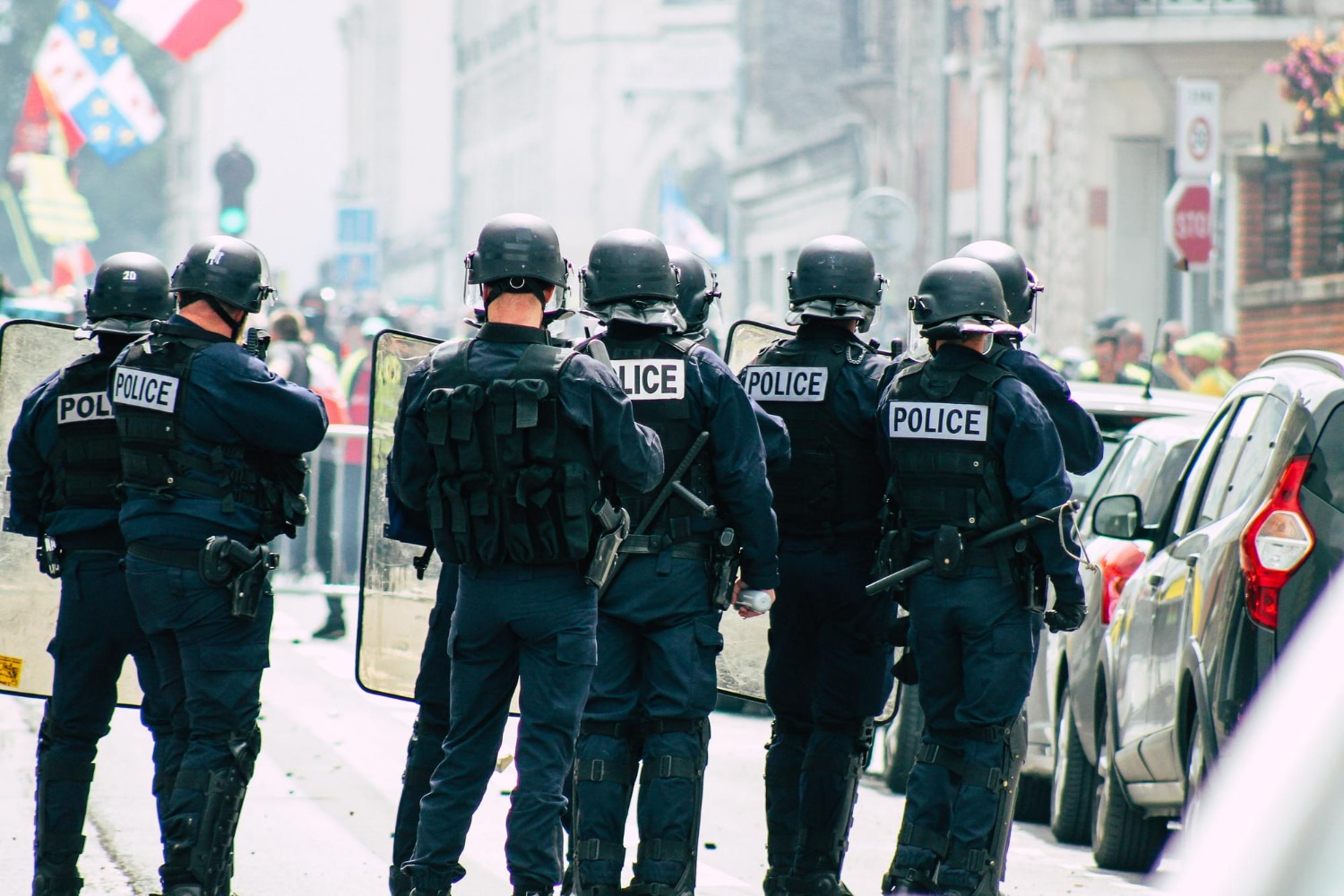
The First Amendment protects peaceful protest in public spaces. California law adds additional protections for demonstrators. But those rights have limits, and the line between lawful demonstration and unlawful assembly can blur quickly in a crowd.
Here is what you need to know before heading to a demonstration:
- Public sidewalks, parks, and plazas are generally protected spaces for protest.
- Blocking traffic, obstructing building entrances, or refusing a lawful dispersal order can result in arrest.
- Police must provide a dispersal order and a reasonable opportunity to comply before making arrests in most circumstances.
- Recording police in public is legal in California.
Arrests at protests do not always lead to charges that hold up in court. If you were arrested at a demonstration, the defense may focus on whether your conduct was actually unlawful or whether you were simply present when police moved in. Charges like failure to disperse, unlawful assembly, or obstruction require proof of specific conduct, not just proximity to a crowd.
If you or someone you know was arrested at a San Diego protest, reach out to our civil rights lawyers team at (619) 794-0451 to understand your options.
The ICE Raid at Buona Forchetta: Fourth Amendment Rights for Immigrants and Business Owners
Can federal immigration agents enter a business without a warrant?
The federal immigration raid at Buona Forchetta raised fundamental Fourth Amendment questions that apply far beyond that one restaurant. The Fourth Amendment protects everyone in the United States, regardless of immigration status, against unreasonable searches and seizures. Federal agents generally need a judicial warrant to enter a private space without consent.
The details matter enormously in these situations:
- Did agents have a judicial warrant signed by a judge, or only an administrative warrant issued by an immigration agency?
- Did an owner or manager give consent to enter? Was that consent voluntary, or did it result from pressure or confusion?
- Were individuals detained beyond what a brief, lawful encounter would permit?
Many people do not realize in the moment that they have the right to ask whether a warrant exists or to decline consent to a search. That is not obstruction. It is the exercise of a constitutional right. Evidence obtained in violation of the Fourth Amendment can sometimes be suppressed, meaning it cannot be used against you in court.
If you were present during a federal raid and you are now facing immigration or criminal charges, the circumstances of how agents entered and what they found may be central to your defense.
What Happens If You Ignore a Federal Subpoena?
What are the consequences of ignoring a subpoena in federal court?
A subpoena is not a request. It is a court order requiring you to appear, testify, or produce documents. Ignoring it does not make it go away. In federal proceedings, failing to comply can result in being held in contempt of court, which carries serious consequences including fines and potential imprisonment.
This is particularly important in federal criminal defense cases in San Diego where federal prosecutors have broad subpoena power and aggressive timelines. People sometimes assume that because they are witnesses rather than targets, the subpoena can be set aside. That assumption is dangerous.
If you have received a subpoena, here is what you should do:
- Read it carefully and note all deadlines.
- Do not ignore it or assume it will be withdrawn.
- Contact a criminal defense attorney before responding.
- Understand that some subpoenas can be challenged or narrowed through a motion to quash.
An attorney can help you determine whether the subpoena is valid, whether any privileges protect certain information, and how to respond in a way that protects your rights. Acting quickly is essential. Deadlines in federal court are strict, and missing them compounds the problem.
Your Rights at Every Stage: From Traffic Stop to Federal Courtroom
Most people do not expect to deal with the criminal justice system. They are going about their day, attending a protest, running a business, or simply driving home. But in a single encounter, everything can change.
Across every scenario covered above, a few principles apply consistently:
- You have the right to remain silent. Use it.
- You have the right to an attorney. Ask for one immediately.
- You have the right to refuse consent to a search. You can say no.
- Evidence obtained in violation of your rights may be suppressible.
- Acting quickly after an arrest or legal demand preserves your options.
Access to justice does not require a law degree. It requires knowing what protections exist and having the support of someone who can enforce them on your behalf.
Contact McKenzie Scott: Federal Criminal Defense in San Diego
At McKenzie Scott, we handle the full range of criminal defense matters in San Diego, from state-level charges to complex federal investigations. Whether you are facing questions from law enforcement, responding to a subpoena, or dealing with charges that arose from a protest or immigration raid, we are prepared to protect your rights at every stage.
Call us at (619) 794-0451 or visit mckenziescott.com to schedule a confidential consultation. The sooner you reach out, the more options we have to help you.